

NRL of Molecular Biology

Head of NRL of Molecular Biology
Assoc. Prof. Viktoriya Levterova, PhD
tel. +359 2 944 69 99 / ext. 290/353
email:
Laboratory staff:
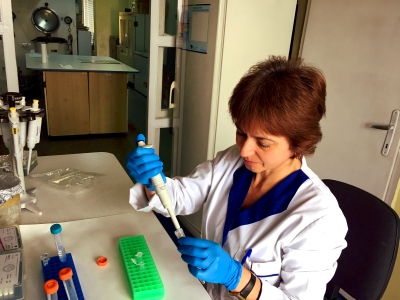
Chief Assist. Nadia Brankova, PhD
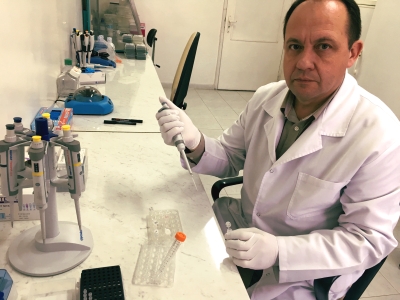
Chief Assistant Ivan Simeonovski, PhD
Magi Ivanova
biologist
Kristin Tankova
medical Assistantт
Krassimira Vassileva
lab worker
History of the laboratory
This laboratory was found in 1972 by Prof. S. Todorov as a Radiational Microbiology Laboratory in the Department of Molecular and Cell Biology in the Institute. Its activity was linked to isotopic analysis of nucleic acids of microorganic origin; Molecular hybridization; Gradient analysis and more. Since 1992-2000 the laboratory has been renamed to the Laboratory of Radiational Microbiology and RNA Technologies and was led by Assoc. Prof. Dr. V. Zlatev.
The main directions in the team's development were: study of serovar specific plasmids of salmonella strains; plasmid analysis of epidemic dysenteric strains; Genetics and metabolism of pertussis bacteria. Since 2000 the head of the Laboratory of Molecular and Radiation Microbiology was Assoc. Prof. Panayotov, PhD.
The main directions of the laboratory activity are: routine diagnostics by PCR and RT-PCR test for B. pertussis, atypical pneumonia acquired by C. pneumoniae, M. pneumoniae, chlamydial infections (C. trachomatis) , Development of molecular-epidemiological methods - Random Amplification of Polymorphic DNA (RAPD), Amplified fragment length polymorphism (AFLP).
From 2012 the laboratory developed and introduced diagnostics for bacterial meningitis by conventional PCR and RealTime PCR for N. meningitidis, S. pneumoniae, H. influenzae. In 2013 and 2014 N. meningitidis typing by RealTimePCR was introduced and the typing of 16 S. pneumoniae serotypes/serogroups was applied by conventional PCR.
In 2016 was implemented a typing of 6 serogroups for H. influenzae by RealTimePCR and we introduced diagnostics for Bordetella parapertussis by conventional PCR.
Diagnostic tests conducted in the laboratory
Pertussis (Bordetella pertussis)
Whooping cough, also known as pertussis is a vaccine-preventable, acute infectious disease of the respiratory tract caused by the gram-negative coccobacillus Bordetella pertussis. The infection is transmitted by airborne droplets. It affects all age groups, but the most vulnerable group of society are infants under one year of age, who are at the greatest risk of severe complications or even death.
Suitable materials for testing by PCR are nasopharyngeal and throat secretions.
Parapertussis (Bordetella parapertussis)
Parapertussis is a highly contagious respiratory disease affecting all age groups of the population. The causative agent is the Gram-negative bacterium Bordetella parapertussis, which is related to Bordetella pertussis. Infants (under 6 months of age) may experience a more severe course of parapertussis infection. In them, as well as in patients of other age groups, it is possible to demonstrate a co-infection of pertussis with parapertussis.
Suitable materials for testing by PCR are nasopharyngeal and throat secretions.
Chlamydia infection (Chlamydia trachomatis)
Chlamydial infection is caused by an intracellular bacterium called Chlamydia trachomatis. It is sexually transmitted and affects both men and women.
Suitable materials for PCR testing for men are first morning urine or urethral secretion, and for women a cervical secretion taken by a gynecologist.
Community acquired atypical pneumonia
Chlamydophila pneumoniae, Mycoplasma pneumoniae, Streptococcus pneumoniae and Haemophilus influenzae cause atypical pneumonia. Infectious is reported to be transmitted by air-droplet route.
Suitable materials for PCR testing are throat secretion, sputum or BAL (broncho-alveolar lavage)
Helicobacter pylori
Helicobacter pylori is a spiral gram-negative microorganism. Experts have found that it exists in the stomach of about 50% of the population. Much of the infected are without symptoms and do not suspect problems with gastrointestinal disorders - ulcers, GERD, gastric cancer.
Suitable materials for PCR testing are materials from biopsy.
Bacterial meningitis
Many bacteria cause meningitis. Neisseria meningitides, Streptococcus pneumoniae and Haemophilus influenzae cause about 80% of the cases. Etiology depends on whether the infection is acquired in a hospital or is acquired in society, with the age and general condition of the patient being of particular importance.
Infection with the causative agent is by air-dripping from sick or healthy bacterial carriers and cranial trauma. The classic symptoms of acute bacterial meningitis include fever, headache, general hyperaesthesia (light-headedness, intolerance to strong sounds and touch), meningitis, and disturbances in consciousness. Meningial symptoms are due to irritation of brain envelopes due to increased intracranial pressure caused by cerebral edema and malfunctions in the cerebral spinal fluid.
Every year, the quality of the laboratory's diagnostics work is controlled and certified by the Institute for Standardization and Documentation of Medical Laboratories  - Düsseldorf, Germany.
Laboratory activity
The laboratory has been accredited by the Bulgarian Accreditation Service (BAS), since 2003 according to the European requirements of the standard BNS ISO EN 17025 for high quality of work.
Since 1998, the quality of diagnostic work has been controlled and certified by the Institute of Standardization and Documentation of Medical Laboratories, - Düsseldorf, Germany.
Since 2006, the laboratory has organized National External Laboratory Control of Molecular Biological Diagnostics in Bulgaria by issuing certificates.
An annual course is included in the Specialization program including molecular diagnostics and typing of infectious agents.
Students, specialists and PhD students are trained in the laboratory.
The laboratory regularly publishes results of its work in specialized international and Bulgarian scientific journals and reports to national and international congresses.
| # | Analyzed microorganism | Type of analysis | Price |
|---|---|---|---|
| 1 | Bordetella pertussis | RealTime PCR | 20,96 EUR |
| 2 | Bordetella parapertussis | RealTime PCR | 20,96 EUR |
| 3 | Bordetella bronchiseptica | RealTime PCR | 20,96 EUR |
| 4 | Bordetella holmesii | RealTime PCR | 20,96 EUR |
| 5 | Multiplex Real-Time PCR for Bordetella pertussis, Bordetella parapertussis, Bordetella bronchiseptica | RealTime PCR | 62,89 EUR |
| 6 | Multiplex Real-Time PCR for Bordetella pertussis, Bordetella parapertussis, Bordetella holmesii | RealTime PCR | 62,89 EUR |
| 7 | Chlamydophila pneumoniae | RealTime PCR | 20,96 EUR |
| 8 | Chlamydia psittaci | RealTime PCR | 20,96 EUR |
| 9 | Mycoplasma pneumoniae | RealTime PCR | 20,96 EUR |
| 10 | Legionella pneumophila | RealTime PCR | 20,96 EUR |
| 11 | Neisseria meningitidis | RealTime PCR | 20,96 EUR |
| 12 | Haemophilus influenzae | RealTime PCR | 20,96 EUR |
| 13 | Streptococcus pneumoniae | RealTime PCR | 20,96 EUR |
| 14 | Taking a throat or eye discharge | 2,05 EUR |
In the NRL "Molecular Microbiology" active research activities are carried out, and the most significant scientific topics in the last five years are:
- FNI project: Molecular genetic identification and creation of an archival genome bank of circulating S. pneumoniae in children, as well as analysis of the prevalent serotypes associated with the introduction of pneumococcal vaccines in the Republic of Bulgaria.
- Project: "Fundamental, translational and clinical research in the field of infections and infectious immunology" under the Operational Program "Science and Education for Intelligent Growth", NCZPB.
- FNI project: "Molecular-genetic studies on the prevalence of pneumocystosis in people in Bulgaria".
- FNI project: No. KP-06-DK 1/10 29.03. 2021 "Study of the interaction of specific structural proteins of SARS-CoV-2 with biologically active molecules and their application to create rapid antigen tests for early diagnosis of COVID-19", under "Competition for funding fundamental scientific research on societal challenges related to with the COVID-19 pandemic – 2020.”